

Guide to Building Your Own Business Success Story in 2026
Imagine looking back at 2026 and seeing your own business success story unfold. What would it feel like to have built something remarkable from the ground up?
This guide is here to help you turn that vision into reality, no matter where you are starting. We’ll walk you through defining your vision, researching your market, planning strategically, securing funding, building a strong team, using technology, scaling wisely, and learning from inspiring real-world examples.
Ready to start writing your business success story? Dive in and discover each actionable step that will move you closer to your entrepreneurial dream.
Step 1: Defining Your Vision and Setting Clear Goals
Building a business success story starts with a clear vision and purposeful goals. Without a compelling direction, even the best plans can lose focus. Let’s explore how vision and goal-setting can set your journey apart.

The Importance of a Strong Vision
A strong vision is the anchor for any business success story. It defines your purpose and guides decisions, especially when things get tough. Take Charles Nsubuga’s journey: his determination to improve nutrition in Uganda became his north star, attracting partners and investors who believed in his mission.
A clear vision does more than inspire—it draws people in. Stakeholders, partners, and investors are more likely to support businesses with a well-articulated purpose. When setbacks happen, your vision helps you stay resilient and adapt, instead of losing momentum.
Vision also helps you stand out. In crowded markets, businesses with a unique purpose are easier to remember and trust. Here’s a quick comparison:
| With Strong Vision | Without Clear Vision |
|---|---|
| Attracts investors | Struggles to gain trust |
| Inspires teams | Lacks motivation |
| Guides decisions | Unfocused strategy |
Every business success story starts with a vision that differentiates and motivates. For more on how vision shapes lasting success, check out the Secrets to Business Success.
Setting SMART Goals for 2026
Turning your vision into reality means setting SMART goals: Specific, Measurable, Achievable, Relevant, and Time-bound. This framework turns big dreams into actionable steps for your business success story.
Start by breaking your long-term vision into smaller milestones. Techniques like OKRs (Objectives and Key Results), KPIs (Key Performance Indicators), and milestone mapping create structure and accountability.
Here’s how a tech startup might set a SMART goal:
| Vision | SMART Goal Example |
|---|---|
| Revolutionize education | Launch MVP platform by Q2 2026 with 5,000 active users |
Align your team around these objectives. Share progress, celebrate wins, and adjust when needed. Remember, only 8% of people achieve their New Year’s goals. Using proven frameworks like SMART and OKRs can help you join that elite group and turn your vision into a business success story.
Set clear, shared goals and revisit them regularly. That’s how real progress happens.
Step 2: Conducting Market Research and Validating Your Idea
Before you can write your business success story in 2026, you need to know your audience and market inside out. Market research is the compass that guides every decision, ensuring your idea is grounded in reality and primed for growth.

Understanding Your Target Market in 2026
Every business success story starts with a deep understanding of the people you aim to serve. In 2026, customer expectations and behaviors are evolving faster than ever. To stay ahead, you must identify emerging trends and the pain points that matter most.
Start with these essential market research tools:
- Surveys and interviews to gather direct feedback
- Focus groups for in-depth discussions
- Competitor analysis to spot opportunities and gaps
- Digital analytics to track online behaviors and preferences
Charles Nsubuga’s business success story is a great example. When launching his nutrition-focused venture, he struggled to convince investors there was real demand. He turned to surveys and government reports, which provided the data needed to validate his vision and attract backers.
Relying on reliable sources, such as industry publications and official statistics, can help you avoid costly assumptions. For additional best practices on conducting market research, explore Market Research for Startup Validation.
Remember, the more you know your market, the more compelling your business success story becomes. This foundation helps you differentiate your offering and build trust from day one.
Validating Your Business Concept
Once you have market insights, it’s time to test your idea before scaling. The most enduring business success story involves prototyping and rapid validation. Start with a minimum viable product (MVP)—a simple version of your solution designed to solve the core problem.
Key MVP strategies include:
- Building a basic prototype to collect user reactions
- Launching a small pilot to measure engagement
- Using feedback loops to refine your offer
Collect customer feedback early and often. Be willing to pivot if the data suggests a better direction. This flexibility is what separates a hopeful pitch from a real business success story.
Consider this: Startups that validate ideas before launch are 50% more likely to survive beyond five years. The lesson is clear—validation is not optional, it’s essential. Real-world examples show that businesses thriving in 2026 all share one trait: They listened, learned, and adapted right from the start.
By validating your business concept, you lay the groundwork for a business success story that stands the test of time.
Step 3: Crafting a Resilient Business Plan and Strategy
Launching a business success story in 2026 requires more than just a great idea. You need a resilient business plan that can withstand change, attract partners, and guide your team through uncertainty. Let’s break down the building blocks of this vital step.
Building a Flexible Business Model
A robust business success story starts with a business model that adapts to both challenges and opportunities. Your value proposition should answer: what unique problem are you solving? Evaluate revenue streams and cost structures to ensure sustainability, and always keep scalability in mind.
For example, SESACO’s early years were marked by slow growth. However, after securing new resources, they reworked their model, streamlined costs, and diversified products. This agility fueled their expansion and helped them stand out in a crowded market.
Consider using a table to map out your core business model components:
| Component | Description |
|---|---|
| Value Proposition | Unique benefit delivered to customers |
| Revenue Streams | Ways your business earns money |
| Cost Structure | Major expenses and investments |
| Scalability | Ability to grow without losing quality |
A flexible approach helps your business success story remain relevant as trends shift toward 2026. Always be ready to pivot and embrace contingency planning to weather unexpected storms.
Strategic Planning for Long-Term Success
With your business model in place, the next step is strategic planning. Prioritize your objectives and allocate resources wisely. Actionable roadmaps break down your vision into achievable milestones, ensuring steady progress.
Partnerships and networks are invaluable. By connecting with industry peers, support organizations, and mentors, you open doors to fresh insights and collaboration. According to research, businesses with strategic plans are 12 percent more profitable than those without.
Scenario analysis is another key tool. By planning for both best and worst-case scenarios, you prepare your business success story to navigate uncertainty with confidence. If you want inspiration from those who have already walked this path, check out Lessons from Entrepreneurial Journeys for actionable insights and real-world examples.
Connecting with Entrepreneurial Support Platforms
No business success story is built alone. Switzerland’s top entrepreneur platforms provide founders with access to resources, education, and funding. These communities offer mentorship, peer learning, and networking that can accelerate your journey.
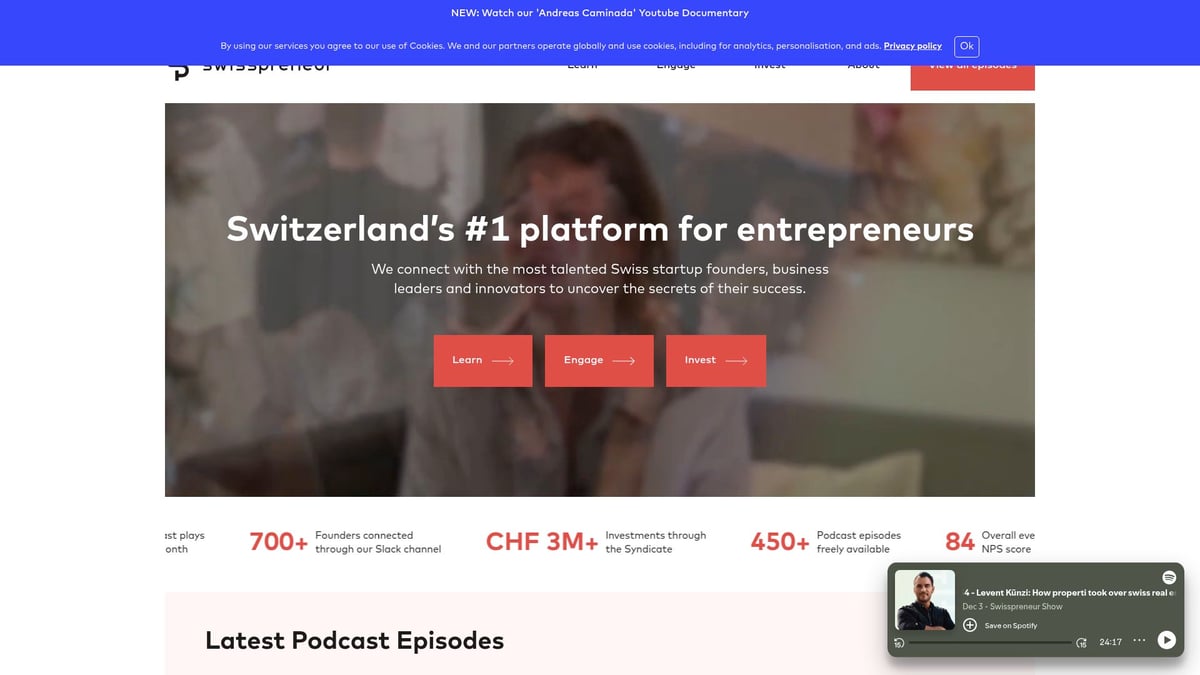
Masterclasses and investment opportunities help you sharpen your strategy and connect with investors who align with your mission. Real-world insights from experienced founders help you avoid common pitfalls and build a resilient business from the ground up.
By leveraging these support networks, you stay informed about market changes and best practices. Ultimately, a strong community can be the difference between a struggling startup and a thriving business success story.
Step 4: Securing Funding and Managing Finances
Securing funding and managing finances is a pivotal chapter in any business success story. The right approach here can be the difference between thriving and stalling out. Let’s break down the key steps to ensure your journey to a business success story in 2026 is built on a rock-solid financial foundation.

Exploring Funding Options for 2026
Every business success story begins with finding the right financial fuel. In 2026, entrepreneurs have more choices than ever before. You can bootstrap with your own savings, approach angel investors, pitch to venture capitalists, start a crowdfunding campaign, or apply for government grants.
Here’s a quick comparison of popular funding sources:
| Funding Source | Pros | Cons |
|---|---|---|
| Bootstrapping | Full control, no dilution | Slower growth, limited funds |
| Angel Investors | Quick cash, mentorship | Equity loss, investor demands |
| Venture Capital | Large sums, networks | High expectations, pressure |
| Crowdfunding | Market validation, exposure | Time-consuming, fees |
| Government Grants | Non-dilutive, supportive | Competitive, paperwork |
Take inspiration from Charles’s business success story. He started with support from shareholders, then leveraged his track record to attract EU-backed financing via the Yield Uganda Investment Fund. His story shows that persistence and adaptability can unlock new funding doors. Remember, the best choice depends on your business model, growth goals, and how much control you want to keep.
Financial Planning and Management
A business success story is never just about raising money. Smart financial planning keeps your venture healthy and ready for growth. Start with robust financial projections, including realistic revenue and expense forecasts. Build detailed cash flow models and stress test them under different scenarios.
Track these key metrics to stay on course:
- Gross and net profit margins
- Monthly burn rate
- Customer acquisition cost
- Working capital ratio
Nearly 29% of startups fail due to cash flow problems. Avoid this by staying disciplined and regularly reviewing your numbers. Make use of digital tools to automate financial tracking and reporting. For a deeper dive into managing your startup finances, check out Finance Essentials for Startups, which gives actionable tips for building a sustainable business success story.
Building Investor Confidence
To turn your vision into a business success story, you must inspire trust in investors. Start with a compelling pitch that clearly shows your value proposition, market opportunity, and projected impact. Be transparent about your challenges and how you plan to overcome them.
Regular, honest communication builds credibility. Use impact metrics such as job creation, community benefits, or environmental outcomes to attract mission-aligned investors. This approach not only secures funding but also forges long-term relationships that help your business success story flourish.
Step 5: Building a High-Performing Team and Culture
Every business success story is powered by a strong team and a thriving culture. If you want your business to thrive in 2026, you must focus on how you recruit, retain, and empower people. Building a team is more than just hiring—it is about creating an environment where everyone can contribute to your business success story.
Recruiting and Retaining Top Talent
At the heart of every business success story is the ability to attract and keep the right people. For early-stage startups, it is crucial to identify the roles that will drive growth, such as product development, sales, and operations. Limited resources mean you need creative ways to appeal to top talent—offering equity, flexible work, or opportunities for rapid skill development.
SESACO’s journey is a powerful example. By 2023, they scaled from 44 to a target of 180 employees. They did this by promoting their mission and providing clear growth paths. Consider using a table to map out roles and recruitment strategies:
| Role | Recruitment Strategy |
|---|---|
| Developer | Equity, remote work |
| Sales Lead | Commission, mentorship |
| Operations | Training, flexibility |
Retaining talent is just as vital. Offer ongoing training and celebrate achievements. Remember, your team is the foundation of your business success story.
Fostering a Culture of Innovation and Resilience
A resilient, innovative culture sets your business apart. Inclusive and mission-driven environments help people adapt and thrive, even during uncertainty. Teams that embrace learning and upskilling respond better to change, which is key for a business success story in 2026.
Did you know companies with strong cultures see 4x higher revenue growth? Encourage open feedback, support learning, and celebrate creative solutions. Activities like regular brainstorming sessions, cross-team projects, and recognition programs can fuel engagement.
Community and networking also play a huge role. Building a supportive environment, as explored in Building a Startup Community, accelerates growth by connecting you with mentors, partners, and peers. A strong culture is not built overnight, but it is essential for any business success story.
Leadership and Empowerment
Leadership is about more than management—it is about inspiring and empowering your team to reach new heights. Lead by example, share ownership, and create clear career paths. Empowered teams feel trusted and are more likely to contribute to your business success story.
Offer growth opportunities, such as mentorship, stretch assignments, and leadership training. Psychological safety—where people feel safe to share ideas and take risks—builds trust and loyalty. This environment leads to higher performance and innovation.
Remember, every business success story is written by people who believe in the mission. Invest in leadership and empowerment, and your team will help you achieve remarkable results. A high-performing team and resilient culture are the backbone of your business success story.
Step 6: Leveraging Technology and Digital Transformation
In 2026, technology is the backbone of every business success story. Whether you're launching a startup or scaling an existing company, digital transformation is no longer optional. It shapes how you operate, compete, and grow. By mastering the right tools and strategies, you can turn your vision into a business success story that stands out in a digital-first world.
Embracing Digital Tools for Efficiency and Growth
Staying ahead in your business success story means adopting technologies that boost productivity and streamline operations. In 2026, key tools include artificial intelligence for smarter decision-making, automation for repetitive tasks, cloud solutions for flexibility, and advanced data analytics for deep insights.
For example, SESACO invested in modern equipment and digital platforms to scale production, improve quality, and reach new markets. This move not only increased efficiency but also positioned the company as a leader in its field.
Here are essential technologies for your business success story:
| Technology | Benefit |
|---|---|
| AI & Automation | Faster, smarter work |
| Cloud Computing | Scalability, flexibility |
| Data Analytics | Informed decisions |
| Remote Tools | Collaboration, agility |
Choosing and integrating the right mix helps your team adapt quickly and stay competitive. These digital investments are the foundation of a resilient business success story.
Building an Online Presence and Brand
A visible online presence is critical for any business success story. In 2026, customers expect to find, research, and trust brands online before making decisions. That means your website, social media, and e-commerce platforms must be polished and engaging.
Digital marketing helps you reach your ideal audience through search engines, targeted ads, and interactive content. Brand storytelling sets you apart by sharing your mission, values, and unique journey.
Did you know that 81% of customers research online before buying? This makes digital visibility essential for building trust and loyalty. Use social media, email campaigns, and creative content to nurture relationships and showcase your business success story.
Cybersecurity and Data Protection
With digital growth comes new risks. Protecting your business success story means prioritizing cybersecurity from day one. Safeguarding customer and business data is crucial for trust and long-term success.
Follow these best practices:
- Use strong, unique passwords and two-factor authentication.
- Regularly update software and backup important data.
- Train your team to spot phishing and security threats.
Stay informed about regulatory requirements for data protection, especially as laws evolve in 2026. Proactive security not only prevents costly breaches but also strengthens your reputation. Make cybersecurity a core part of your business success story.
Step 7: Scaling Sustainably and Measuring Success
Scaling your business is about more than just growing fast. To create your own business success story, you need a plan for sustainable growth, clear ways to measure progress, and a commitment to making a positive impact. Let’s break down how to scale with purpose and track your achievements along the way.
Developing Sustainable Growth Strategies
Building a business success story means balancing expansion with stability. Rapid growth is exciting, but without strong systems, it can quickly become overwhelming. Start by documenting your core processes and automating routine tasks. This creates a solid foundation that supports scaling.
Learn from SESACO’s approach: they expanded supplier agreements from 200 to 10,000 farmers by gradually building capacity and strengthening partnerships. Focus on scalable systems, such as reliable supply chains and adaptable technology. Always align growth plans with your long-term vision to avoid losing direction as your business evolves.
Measuring and Celebrating Milestones
Tracking your progress is essential for any business success story. Set clear key performance indicators (KPIs) to gauge your performance over time. Use data dashboards or simple tables to visualize progress toward goals and make adjustments as needed.
Consider using frameworks like Market Validation Key Metrics to assess your growth and market fit. Regularly celebrate milestones, both big and small, to keep your team motivated. Recognizing achievements boosts morale and reinforces a culture of continuous improvement.
Giving Back and Creating Community Impact
A true business success story goes beyond profits—it makes a difference in the community. SESACO’s journey shows the impact of supporting local farmers and improving national nutrition. Look for ways your business can give back, such as job creation, fair sourcing, or social initiatives.
Highlighting your community contributions can also attract partners and customers who share your values. Social responsibility is increasingly important to modern consumers, so weave it into your strategy for long-term success and brand loyalty.
Preparing for Future Challenges and Opportunities
To future-proof your business success story, stay agile and ready for change. Markets and technologies evolve quickly, so invest in ongoing learning and scenario planning. Encourage your team to spot new trends and be open to pivoting when necessary.
Building a legacy means preparing your business to thrive well beyond 2026. Document lessons learned, mentor the next generation, and keep your mission at the heart of every decision. Your story can inspire others to build, scale, and give back in their own unique ways.
You’ve made it this far, which means you’re serious about building your own business success story by 2026. If you want to surround yourself with other ambitious founders, share your journey, and tap into mentorship and resources that can accelerate your progress, why not take the next step? Joining a supportive community can make all the difference—especially when you’re setting bold goals and navigating challenges. Ready to connect with fellow Swiss entrepreneurs and gain access to events, insights, and real-world support? Apply to our swiss founders community and start shaping your own success story today.